
Ever ordered something that looked incredible online, only to open the package and wonder whether you got the same product? That’s the risk of shopping from a polished picture instead of an honest product listing.
When you compare cannabis flower online, photos do a lot of the talking. But a neon-green nug, a dramatic close-up and a suspiciously perfect purple glow can make ordinary flower look exceptional. Sometimes the picture is heavily edited. Sometimes it’s a generic photo of the strain. And sometimes it’s simply an old batch that doesn’t resemble what’s available today.
At Order Bud Online, our approach is simple: show people what they’re actually looking at, not a fantasy version of it. Here’s how to spot misleading weed photos, ask smarter questions and get better value for your dollar.
The 20-second photo check
Look for natural colour, visible texture, multiple angles, current-batch information and clear product details. If the image is stunning but the listing tells you almost nothing about the product, don’t let the photo make the decision for you.
What Counts as a Fake or Misleading Weed Photo?
Not every attractive product photo is fake. Good lighting and a sharp camera can show a real bud accurately. The problem starts when the image creates an expectation that the actual product can’t reasonably meet.
- Heavily edited photos: Colour, contrast, sharpness or artificial effects have been pushed so far that the flower looks substantially different from real life.
- Recycled strain photos: The same generic picture is used for different strains, grades or products, even when the contents are different.
- Outdated batch photos: A great-looking previous harvest is shown without making it clear that the current batch may look different.
- AI-generated or composited images: A synthetic or assembled image is presented as a photograph of actual inventory.
A photo may be genuine and still be misleading if it shows an unusually photogenic sample instead of a fair representation of the product being offered. That’s why context matters.
7 Ways to Tell Real Cannabis Photos From Misleading Ones
1. Watch for Colours That Seem Too Perfect
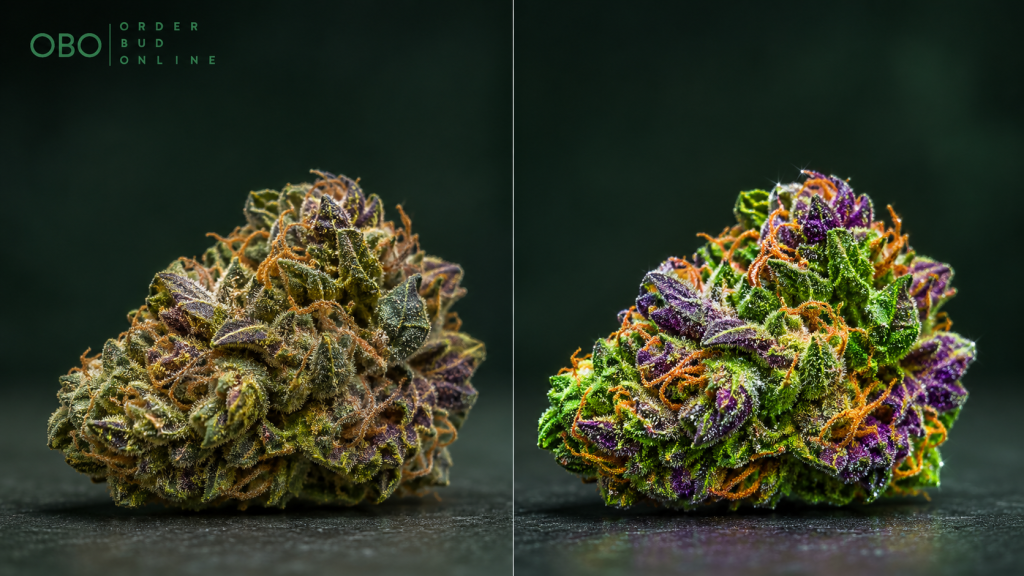
Cannabis naturally comes in shades of green, purple, amber and orange. Deep purple flower can be entirely real. So can trichome-heavy buds that look frosted. But when every colour seems dialled up to maximum intensity, pay attention.
Over-saturation can turn ordinary green flower into an electric-green spectacle. Aggressive contrast can make purple areas almost black and trichomes unnaturally bright. Even white balance or coloured lighting can change the way a product appears on screen.
What to look for: Balanced lighting, believable colours and details that remain visible in both bright and shaded areas. An unusually vivid colour is a reason to look closer, not proof of deception.
2. Look Beyond the One Glamour Shot
Extreme close-ups are excellent for showing surface texture, but they don’t tell you much about the full bud. A macro shot of a single frosty corner can hide loose structure, excess leaf, broken pieces or the actual size of what’s being shown.
Useful product photography gives you context: a clear full-bud image, a closer detail shot and, where appropriate, a view of the typical contents or packaging. The goal isn’t a photography award. It’s helping you understand the product.
Ask yourself: Can I see the overall shape, trim, colour and typical bud size—or just a cropped patch of sparkle?
3. Run a Quick Reverse Image Search
Here’s a surprisingly useful check: run the photo through Google Lens or another reverse image search. If the exact same bud appears across several unrelated stores, different strain names or old listings, the image may be a generic promotional photo rather than a picture of current inventory.
- Save the product image or use your browser’s image-search option.
- Open Google Lens and search using that image.
- Compare matching results, including strain names, sellers and publication dates.
- If the same image represents multiple products, ask whether the listing shows the actual item or merely an example.
Important: A duplicate image doesn’t automatically mean fraud; legitimate retailers sometimes use the same manufacturer-supplied photo. It does mean you should be clear about whether you’re viewing the real product.
4. Zoom In—But Don’t Pretend Pixels Are a Lab Test
Real close-ups can reveal individual trichomes, pistils, sugar leaves and irregular natural textures. Over-sharpening can create bright halos along the edges of buds, while synthetic images may show strange repeating patterns or details that don’t hold together.
Those are clues, not a foolproof AI detector. Compression, low-light photography and camera processing can create artifacts too. A professional-looking photo isn’t automatically fake, and a rough phone photo isn’t automatically honest.
Most importantly, you cannot establish THC percentage, terpene content, freshness or safety from a photo alone. Visual appearance needs to be considered alongside accurate labels, batch details and testing information when available.
5. Ask Whether the Photo Represents the Current Batch
Two harvests sold under the same strain name can look different. Genetics, growing conditions, trimming, drying and curing all influence appearance. A real picture from last season can still create unrealistic expectations for today’s inventory.
Before deciding, look for clear descriptions of the batch, grade, quantity and appearance. If the information is missing, a reasonable question is: “Is this a photo of the current product, or a representative image?”
For a wider checklist covering product details, service and credibility, read our guide on how to choose an online dispensary in Canada.
6. Make Sure the Picture Matches the Grade and Product Type
One of the easiest ways to misjudge value is to compare products based on their most flattering photo rather than what the listing actually describes. Big, dense showcase buds should not become the default expectation for every price tier.
For example, popcorn buds are generally smaller pieces of flower. Their size can make them a practical value option, but a listing should show or describe that honestly—not borrow a giant top-cola image and leave buyers guessing.
The same principle applies when comparing AAA value flower, AAA+ premium buds and AAAA flower. Grade labels can vary between retailers, so compare the actual description, trim, structure and price instead of trusting the label or photo by itself.
7. Judge the Listing, Not Just the Image
A useful cannabis product page should answer basic questions without making you hunt for them: What is it? How much is included? What grade or type is being described? Are there useful product details? Is the image of the actual product or just a generic illustration?
The same standard should apply beyond flower. For cannabis concentrates, a photo can show consistency and texture, but cannot verify purity or processing quality. For edibles, clear packaging and serving information are more meaningful than a glamorous candy photograph. If concentrates are new to you, our article on how to choose cannabis concentrates explains the different types.
Real Photos vs. Misleading Photos: A Quick Comparison
| What you’re checking | More useful evidence | Reason to ask questions |
|---|---|---|
| Colour | Balanced light and natural variation | Neon saturation or extreme colour casts |
| Framing | Full-bud view plus useful close-ups | Only one tightly cropped glamour shot |
| Image origin | Actual-product or clearly labelled representative image | Identical photo attached to unrelated products |
| Batch accuracy | Current details and realistic variation explained | No indication whether the image is current |
| Value | Clear quantity, type, grade and unit price | A beautiful image with vague specifications |
How to Get Better Value When Buying Weed Online in Canada
A low sticker price isn’t automatically a great deal. A spectacular photo isn’t automatically a premium product. Better value comes from knowing what you’re comparing.
- Compare price per gram. Divide the price by the quantity to compare different package sizes fairly; account for any additional fees.
- Understand the category. Smaller buds, value flower and premium flower may suit different priorities. Browse cannabis value deals for a useful starting point when comparing descriptions and prices.
- Read past the headline. Confirm the listed weight, product type, grade description and available batch information.
- Consider freshness and storage. Even attractive flower can change with poor storage. Our cannabis freshness and storage guide covers what matters after the product arrives.
- Check what photos can’t tell you. Use reliable lab and batch documentation where available rather than inferring potency or cleanliness from colour or “frost.”
The best value test: Would you still want this product if the photo were less flattering?
If the quantity, product details, price and realistic appearance still add up, you’re making a more informed choice. If the photo is doing all the selling, take another look.
Less Fugazi. More “What You See Is What You Get.”
We don’t think anyone should need to gamble on a product photo. At Order Bud Online, the goal is straightforward: real photos of actual products, clear descriptions and competitive pricing so customers can evaluate what they’re considering—not an airbrushed fantasy.
That doesn’t mean two buds will be identical or a screen can perfectly reproduce real-life colour. Natural variation and display settings exist. It means photography should help set honest expectations, not manufacture them.
Whether you’re exploring cannabis flower, comparing popcorn buds for value or reading the details on shatter and other concentrates, take the extra few seconds to look beyond the most flattering frame.
Your 30-Second Checklist Before You Decide
- ☐ Does the image look like a believable photograph of cannabis?
- ☐ Can I see the full product, not just an extreme close-up?
- ☐ Is the picture of the actual product or clearly identified as representative?
- ☐ Is the listing specific about quantity, grade, type and other relevant details?
- ☐ Have I compared the price per gram rather than the photo alone?
- ☐ Do I know what cannot be verified visually, including potency and safety?
Frequently Asked Questions
How can you tell if weed photos are fake?
Look for unusually exaggerated colour, inconsistent textures, reused images, missing full-product views and a mismatch between the picture and the description. None is conclusive on its own. Reverse image search and a direct question about the current batch can help clarify what the photo represents.
Does purple or extremely frosty weed automatically mean better quality?
No. Purple colour can be a natural plant characteristic, while visible trichomes are only one part of evaluating a flower’s appearance. Neither tells you the full chemical profile, freshness, safety or overall quality.
Can you tell THC potency from a weed photo?
No. A photograph cannot establish THC percentage or terpene content. When those details matter, refer to accurate product information and available test results.
What if the product looks different when it arrives?
Some differences in size, trim and colour can reflect normal variation, lighting and screen settings. For a major discrepancy, keep the product listing and order details, document the difference and contact the seller to clarify whether the photograph represented the product or a different batch.
Good products shouldn’t need fake photos.
Skip the photo roulette. Compare real product details, explore different flower grades and find the value that makes sense to you.
